

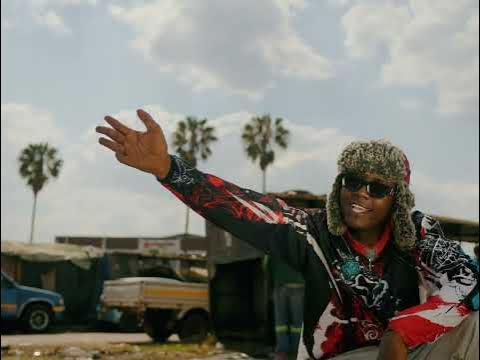
I have been a fan of hip-hop for as long as I can remember, and there is nothing quite like the feeling of watching a sound take root in your own country and grow into something that no longer needs to look across the ocean for approval. That is what is happening in Zimbabwe right now. The music coming out of the ghettos is personal, relatable, and alive, made by people who have stopped asking for permission. At the centre of this energy stands an artist named Octie. He has turned hip-hop into a sermon.
Before I take you to his church, you need to understand the world he comes from.
Whilst Zim Hip-hop originates from hip-hop, which started in the Bronx in the early 1970s, it has now evolved into its own genre on its own terms. Zim Hip-hop is not “Hip-hop in Zimbabwe”. Zim Hiphop is a distinct genre. There are Zimbabwean artists who do hip-hop (in the global sense), such as the amazing Hanna, then there are Zim Hip-hop artists such as Holy Ten. Zim Dancehall has followed the same path, becoming a genre on its own rather than a local version of Jamaican dancehall. The same is true of SA Hiphop, where some artists like Nasty C and Stogie T operate in the international hip-hop space while others like Okmalumkoolkat, iFani, ZoocieCokeDope, Buzzi Lee, the late Riky Rick [MHSRIP], Cassper Nyovest, Loatinover Pounds, and Efa libhinqa Lokuqala have built a distinctly South African sound.
Zim Hiphop is heavily characterized by the storytelling of ghetto youth stories, where artists narrate the lived realities of young Zimbabweans navigating hardship, ambition, and survival in the country’s townships and cities. This storytelling is not abstract or aspirational; it is grounded in specific, recognizable details of everyday life, from the struggle to afford bus fare to the pressure of providing for a family with no stable income. Holy Ten became known for “A Thousand True Stories” because his music captured exactly these kinds of narratives. Zim Hiphop songs like “Mkoma Brian” and “Gomba” are emblematic of this approach, using vivid, unflinching lyrics to turn personal experience into communal testimony. The power of Zim Hiphop lies in this ability to make the listener feel seen, not through clever wordplay or borrowed flows, but through the honest retelling of what it means to be young and Zimbabwean right now.
Within Zim Hiphop there is an equally distinct trap subgenre. Trap began in America, reaching its commercial peak with Pop Smoke [MHSRIP] before being extended by London rappers like Central Cee; its signature is a fast, high-energy, drug-fueled tempo. On the other hand, in Zimbabwe, the tempo is slowed down in favour of story-telling into what we call Jecha Trap. Jecha means soil, which here means sons of the soil, which means the povo, which means the ghetto youths. Jecha Trap was popularised by Voltz JT, whose initials stand for Jecha Trap. Because Jecha Trap is a subset of Zim Hiphop, it remains story-driven, but it is comparatively mellow compared to American/global trap.
Now this is where Octie (real name Prince Marecha) comes in. Octie within Jecha Trap is not story-driven per se, but lesson-driven, and he sees his songs as mharidzo – sermons in Shona – with the studio serving as the mount where he makes his acute and astute observations about society: Trap Mharidzo. In “Fofa Fofa”, he warns “zipper ngaivarwe, ghetto razara map*rnstar”, that is, ghetto youths should avoid promiscuity because hood/poverty-based relationships are now transactional and without loyalty. In “Do That”, he opens the sermon with “I have got some issues that I need straightening” before turning on exes, hypocrites, and people who left but still try to linger to elicit reaction from their departure instead of just…leaving. In “Tsiurai”, he admonishes his reproachers, “if you knew what you were talking about you would have done it already”, effectively declaring, “I am the man in the arena”. To hustlers he says “harisi hustle kana rine victim” — your hustles are not hustles if you are scamming people — and “dhijo roda prayer”, because to succeed in these hustling streets full of snakes, one needs divine intervention. His songs are not just admonishments; they are equally exhortations of hope and prayer for a successful future; and that balance is exactly the mind-state of young Zimbabweans right now.
Compared to general Zim Hiphop, Octie has his own language and his own slang pulled directly from the ghetto. He is funny. He is intelligent. He is driven. He is inevitable. He knows how to capture attention. Every song sounds fresh. When you hear his tag and then the beat drop, you know the sermon is about to start. His fans, and I am one of them, think he is the best thing we have ever had. The way I got to know about Octie is through Facebook, where he took his songs, synced them to entertaining dance videos, added the lyrics to them, and captured attention that way. He has been doing music for a long time; his EPs on YouTube span over five years. But now he has the attention, and he is not going anywhere.
I was tempted to title this article “the exciting future of Zim Hiphop”, but Octie is not the future. Octie is now.
Here are my top five favourite sermons from him, in no particular order, that I think you should check out: “Do That“, “Fofa Fofa“, “Mukoma Varipo“, “Tsiurai“, and “Kupi Kwacho“.
The state of Zim Hiphop right now is genuinely exciting because artists like Octie are proving that you do not need to sound like anyone else to be heard. The energy spilling out of the ghettos cannot be manufactured or copied. It can only be witnessed and appreciated.
To keep up with Octie, subscribe to his YouTube channel, follow his Facebook page, and join his WhatsApp community.
That is it from me, Mthokozisi Mabhena writing for BI Art. Hope to see you in the Octie church 🙂
About the author: Mtho is a team leader of iMagiNation (a nation of Magis), a Zimbabwean artist association focused on learning how to create, distribute, monetise, and manage art to create a sustainable living income for artists.