

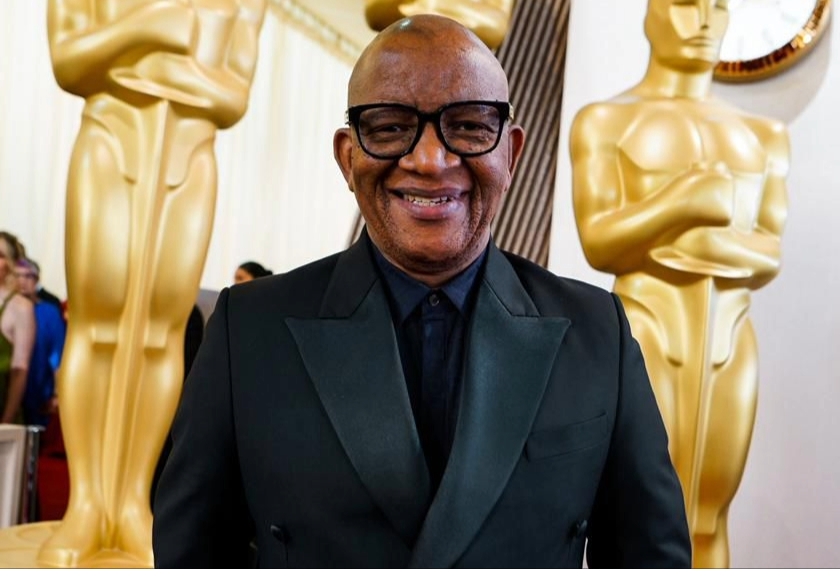
Dear Lebo M,
First, let me say this properly, because it matters.
You are a giant.
Not in the exaggerated, social media “legend” sense we throw around casually, but in the real sense. The kind of giant whose work travels further than passports, further than borders, further than language itself. “Nants ingonyama” is not just a chant. It is one of the few sounds that can make the entire world pause and feel something African.
That matters.
Which is why this moment matters too.
Because somewhere between that chant and a lawsuit, something else slipped out. Something that feels far less musical and far more uncomfortable.
The Joke That Became a Lawsuit
You are suing Learnmore Jonasi, a Zimbabwean comedian, for using the chant in a satirical way.
Now, I understand the instinct to protect your work. Artists should have rights. Culture should not be carelessly stripped of meaning. There is a valid conversation to be had there.
But here is where things shifted.
Not the lawsuit.
The insult.
“Zimbabwean idiot.”
And just like that, the conversation stopped being about art. It stopped being about comedy. It became something else entirely.
A Teachable Moment That We Missed
Let’s talk about the joke itself.
Comedy, by its very nature, plays with meaning. It stretches language. It bends interpretation. Sometimes it translates things too literally. Sometimes it deliberately misunderstands.
That is the point.
And in this case, the direct translation or reinterpretation of the chant by Learnmore Jonasi did not feel like an attack. It felt like satire. Familiar, slightly irreverent, but not malicious.
This could have been a moment.
A powerful one.
You could have corrected the meaning.
Explained the depth of the chant.
Educated a global audience about its cultural weight.
You could have turned a joke into a lesson.
Instead, we turned it into a lawsuit.
And worse, into a moment of insult.
Comedy Is Not Always Comfortable, But It Is Necessary
Comedians are not historians. They are not custodians of perfect meaning. They are interpreters of society, often messy ones.
They get things wrong sometimes.
They push too far sometimes.
They simplify things they should not.
But they also open doors.
And when we respond to that with legal action and personal insults, we risk doing something dangerous.
We risk telling society that humour must be safe. That satire must be approved. That cultural engagement must be polite.
And that is not how culture grows.
What That One Line Revealed
Let me be honest with you, and I say this with respect.
The phrase “Zimbabwean idiot” landed harder than anything else in this entire situation.
Because it did not sound like frustration with a comedian.
It sounded like something else.
It sounded like that quiet, everyday, almost casual way that Zimbabweans are sometimes spoken about in South Africa. That tone. That hierarchy. That subtle suggestion that some Africans belong more than others.
And maybe that was not your intention.
But intention does not erase impact.
From where I sit, as a young Zimbabwean in Victoria Falls, that line did not feel like an isolated insult. It felt familiar.
Uncomfortably familiar.
Understanding Without Excusing
Let me also say this clearly, because nuance matters.
I understand South Africa’s frustrations.
I understand the economic pressure.
The unemployment.
The strain on systems.
I even understand, at a human level, where movements like Operation Dudula come from. Not the violence. Never the violence. But the frustration that feeds them.
Ignoring that frustration would be dishonest.
But turning that frustration into language that reduces people to their nationality is something else entirely.
That is where frustration becomes Afrophobia.
And that is where it becomes dangerous.
The Irony We Cannot Ignore
You helped create one of Africa’s most globally celebrated sounds.
A chant that represents identity, pride, and shared heritage.
And in defending it, we found ourselves in a moment that divides Africans along borders that chant never recognised.
That is the irony.
That is the discomfort.
What This Means For Me, Personally
As a Zimbabwean, I live in that in-between space.
Close enough to South Africa to understand it.
Close enough to feel it.
Close enough to be affected by it.
And moments like this remind me how fragile belonging can be.
How quickly you can move from being part of the story to being the punchline.
Or worse, the insult.
I do not think you are a xenophobe.
But I do think this moment revealed how easily even our most respected voices can slip into language that carries the weight of something much bigger than the moment itself.
A Different Ending We Could Have Had
This could have gone differently.
You could have laughed it off.
You could have engaged.
You could have taught.
You could have reminded the world what the chant really means.
And maybe, just maybe, we would have all walked away with a deeper understanding instead of a deeper divide.
Final Thought
This is not really about a comedian.
It is not really about a chant.
It is about how we speak to each other when we are frustrated, when we feel disrespected, when we feel the need to defend what is ours.
Because in those moments, we do not just reveal our anger.
We reveal our assumptions.
And sometimes, we reveal more than we intended.
Respectfully,
A Zimbabwean who grew up hearing your music,
And still believes it belongs to all of us