

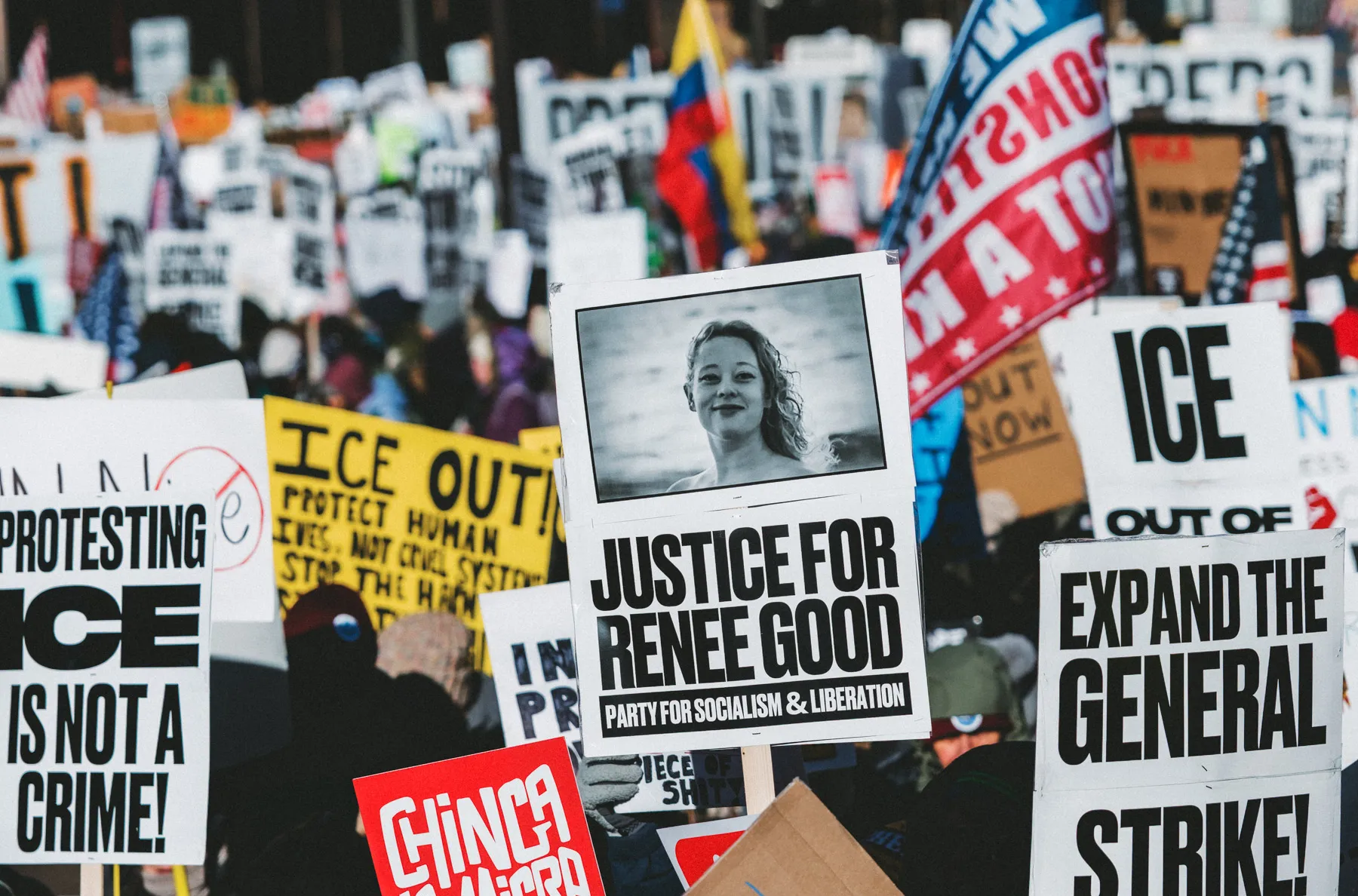
Or how Minneapolis briefly restored my faith in protest, humanity, and the idea that giving up is exactly what power wants
I need to start with a confession.
I am a left winger who is getting tired.
Not “needs a nap” tired. I mean that deep, political exhaustion where every headline feels like a prank and every morning starts with the same dumb question. How is Donald Trump still president. How did this happen again. Why does history keep buffering and then loading the worst possible option.
This feeling is not unique to 2026. Political exhaustion is one of the oldest tools of power. The Roman Empire mastered it. So did colonial administrations. You don’t crush people all at once. You wear them down. Taxes here. Violence there. A few reforms announced loudly. A few crackdowns done quietly. Eventually people stop asking if things can change and start asking how to survive.
In Rhodesia, exhaustion was policy. In apartheid South Africa, it was procedural. Endless commissions. Slow reforms. Controlled outrage. The goal was never to win hearts. It was to outlast resistance.
So, when people tell me they are tired of caring, I don’t judge them. I recognize the strategy at work.
Watching Trump from a Country That Knows This Script
From Victoria Falls, American politics often looks like a loud export. Too many slogans. Too much confidence. Too little memory.
But Trump has always felt familiar to people who grew up around authoritarian instincts dressed as order. The obsession with enemies. The moral panic. The constant suggestion that chaos will reign if “strong leadership” loosens its grip.
This is not new. It is Hungary under Orbán. It is Turkey under Erdoğan. It is Chile under Pinochet when order was used to justify disappearance. It is apartheid South Africa insisting it was maintaining stability while violently policing Black existence.
So, when federal agents began sweeping Minneapolis, it didn’t feel foreign. It felt like every state that has ever tested how far it could go before the world looked away.
Why I Stopped Believing in Protests (And History Almost Agreed with Me)
I’ll be honest. I had become sceptical of protests.
History gives you reasons to be. The Paris riots of 1968 energised students but scared the middle. The 1968 US riots after Martin Luther King’s assassination helped Richard Nixon sell “law and order” and crush reform momentum. The Arab Spring started with hope and ended with generals, prisons, and exhaustion.
Even closer to now, Black Lives Matter in 2020 began with overwhelming public support. Then came looting, arson, and images that allowed reactionaries to shift the story from police violence to “chaos.”
Protests don’t fail because anger is wrong. They fail when power successfully reframes anger as threat.
That’s why Minneapolis surprised me.
Discipline Is the Difference Between Resistance and a Gift to Power
Instead of rage, there was discipline.
Instead of fire, there were phones.
This is straight out of the civil rights playbook. Birmingham in 1963 did not work because people shouted louder. It worked because Bull Connor showed the world dogs and hoses against children. Selma worked because the Edmund Pettus Bridge became a symbol of unprovoked brutality, not activist excess.
Minneapolis is following that logic instinctively.
People document. They are slowing operations. They refuse escalation. They build networks quietly. Faith groups feed families. Neighbours walk children to school. Signal groups track movements.
This is not performative activism. This is what resistance looked like in occupied Europe. This is how Polish Solidarity survived martial law. This is how anti-apartheid networks functioned when protests were banned outright.
Effective resistance is boring. That’s why it works.
Non-Violence Is Strategic, Not Moral Theatre
Non-violence gets misread as weakness by people who have never faced real power.
It isn’t.
Gandhi understood this. So did Nelson Mandela after Rivonia, when armed struggle gave way to moral isolation of the apartheid regime. Non-violence forces the state to either restrain itself or expose itself.
Minneapolis is forcing exposure.
Armed federal agents versus ordinary civilians. Calm voices versus aggression. Documentation versus denial.
This is how empires lose legitimacy. Not when they are shouted at, but when they are seen clearly.
When Narratives Collapse, Power Retreats
The administration has tried the usual script. Paid agitators. Domestic terrorists. Dangerous radicals.
It didn’t work because the visuals contradict the story.
This has happened before. Vietnam didn’t end because Americans suddenly opposed war in theory. It ended because images of napalm and body bags broke the narrative. Apartheid didn’t collapse because of speeches alone. It collapsed because images from Sharpeville and Soweto made denial impossible.
Minneapolis is producing the same effect on a smaller scale.
When you see a woman shot while trying to leave, propaganda dies on impact.
Why This Shifted Something in Me Personally
I won’t pretend this saved democracy. Trump is still president. ICE still exists. People are still suffering.
But it is cracking my nihilism.
Because authoritarian systems do not retreat unless they feel pressure. Even temporary retreats matter. They show limits exist.
From where I sit, in a country that knows what happens when people disengage completely, that matters deeply.
Zimbabwe teaches you this. Once people stop believing anything works, power stops pretending altogether.
What I’m Carrying Forward
This year, I want to care again. Not loudly. Not perfectly. Not online for applause.
I want to care strategically.
I want to remember that protest is not dead. It just demands discipline. Memory. Humility. An understanding that how things look often matters more than how righteous they feel.
History keeps proving this. From Selma to Soweto to Solidarity to Minneapolis.
Power wants you tired. Power wants you cynical. Power wants you convinced nothing works.
For a brief moment in Minnesota, ordinary people proved otherwise.
And for a left winger who was starting to believe the world had moved past moral consequence, that is enough to keep me in the fight.